

Wilchem Industrial Store
Transmission & Engine Soak Tank Cleaner
Transmission & Engine Soak Tank Cleaner
Couldn't load pickup availability
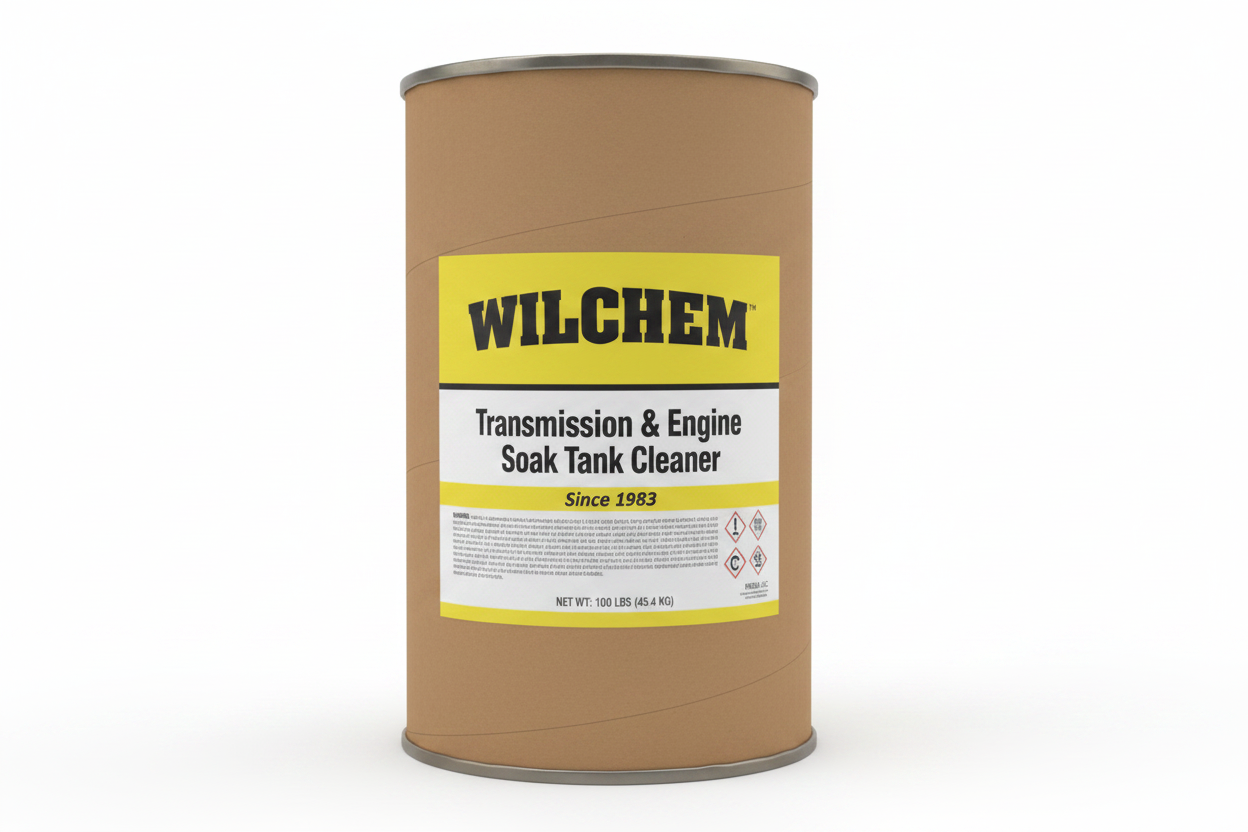
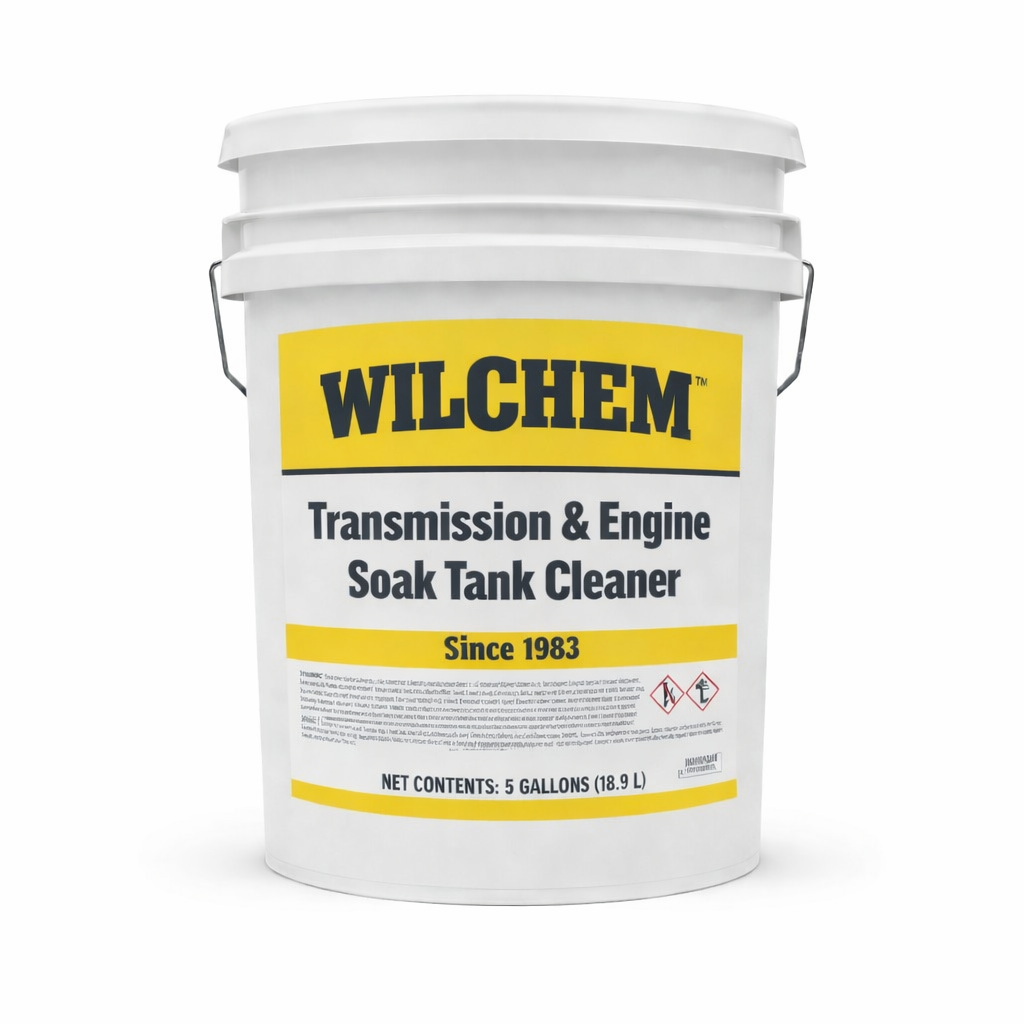
Transmission & Engine Soak Tank Cleaner is a high-alkaline concentrated cleaner formulated for aluminum-safe parts cleaning in soak/dip tank and spray cabinet applications. Its powerful formula aggressively dissolves grease, oil, carbon deposits, and transmission fluid residues from engine components, transmissions, and aluminum parts — without attacking aluminum surfaces.
Engineered for professional shops and industrial facilities that demand fast, thorough cleaning at high temperatures, this cleaner maintains peak performance at 190°F and a working pH of 12–13 for maximum soil removal efficiency.
- Aluminum-Safe High-Alkaline Formula — Aggressively cleans grease, oil, carbon, and transmission fluid without damaging aluminum components
- Primary: Soak/Dip Tank Application — Use 1 oz per gallon at 190°F; soak parts 15–20 minutes for thorough cleaning
- Secondary: Spray Cabinet Compatible — Use 1–2 oz per gallon at 190°F; maintain pH 12–13 for optimal performance
- High-Temperature Optimized — Engineered to perform at 190°F for maximum soil penetration and removal
- Concentrated & Economical — Low use rate makes it cost-effective for high-volume shop operations
- Professional Grade — Trusted for transmission rebuilders, engine shops, and industrial parts cleaning facilities
Directions
For Use In Soak/Dip Tanks (Primary):
Dissolve 1 oz per gallon of water in the dipping tank. Maintain water temperature at or above 190°F. Dip parts and soak 15–20 minutes, then rinse. Increase concentration for heavily soiled parts.
For Use In Spray Cabinets (Secondary):
Dissolve 1–2 oz per gallon of tank water. Maintain spray cabinet temperature at 190°F and pH between 12–13. If foaming occurs, use the oil skimmer or clean the oily residue from the cabinet. A defoamer may also be used to control foaming.